
Subfloor Leveling Secrets for Squeak-Free Hardwood Installations on Concrete Slabs
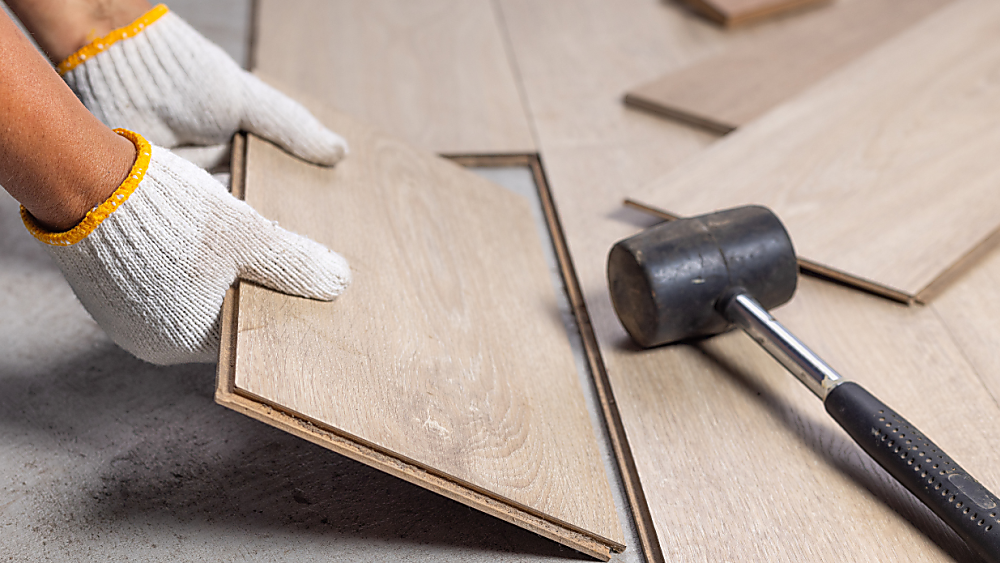
Concrete slab foundations across Covina, CA homes present specific physical challenges for genuine wood floors. Mid-century ranch renovations in Covina and open-concept remodels in Glendora sit on older ground-level slabs that develop subtle dips, crowns, and high spots over decades of ground settling. When planks bridge across low areas, walking across the room pushes the wood downward into empty space, generating annoying friction squeaks, popping sounds, and hollow echoes.
Direct-glue and floating plank setups need a solid, flat foundation. Achieving a silent walking surface means correcting the physical tolerances of the slab before the first plank leaves the carton.
At a Glance: Slab Leveling Standards for Quiet Wood Floors
- Maximum tolerance: 3/16-inch variance over a 10-foot radius, or 1/8-inch variance over 6 feet.
- Surface profiling: Mechanical grinding on high spots to remove drywall mud, curing agents, and high aggregate peaks.
- Moisture defense: High-performance liquid vapor barriers paired with slab-compatible primers.
- Cavity correction: Self-leveling underlayment blends that bridge low zones without crumbling under structural stress.
- Adhesive contact: 100 percent transfer between the subfloor and plank backing to stop vertical travel completely.
Physical Mechanics Behind Squeaks on Concrete
Wood planks do not squeak on concrete because of mechanical fasteners; they squeak because uneven slabs permit vertical movement. When your subfloor dips even a fraction of an inch, tongue-and-groove joints rub against each other under foot traffic. In warm San Gabriel Valley microclimates where dry summer heat meets indoor air conditioning, wood expands and contracts naturally. Unlevel high spots focus that movement into specific pivot points, flexing the planks until friction produces loud, sharp squeaks.
Careful subfloor correction ensures your chosen hardwood flooring stays completely anchored across the entire floor plan without vertical bounce.
Slab Preparation Steps for Noise-Free Performance
1. Map High and Low Zones
Mapping begins with a 10-foot precision aluminum straightedge swept across the bare foundation. Mark all dips deeper than 3/16 inch with carpenter chalk, and highlight high humps where the straightedge rocks. Concrete slabs inside Azusa and Claremont homes often feature raised ridges along expansion joints that need immediate mechanical leveling.
2. Grind Down the Peaks
Low spots cannot be patched correctly until you remove the peaks. Diamond-cup wheel grinders shave down concrete high spots until they match the primary plane of the room. This process strips away drywall overspray, paint drips, and old carpet adhesives that prevent patch compounds from bonding securely.
3. Test Slab Moisture Content
Ground moisture constantly moves upward through porous concrete foundations. Trapped moisture vapor attacks leveling compounds and weakens adhesives, leading to hollow spots that eventually rattle. Calcium chloride testing or in-slab relative humidity probes verify moisture levels before pouring self-levelers or spreading adhesive.
4. Apply Primer and Underlayment Compounds
Never pour self-leveling compound directly onto raw, dusty concrete. A dedicated acrylic or epoxy primer seals the slab pores, preventing the dry concrete from pulling water out of the wet leveler prematurely. Once the primer becomes tacky, pour a cementitious self-leveling compound across the mapped depressions, feathering the edges flush with the surrounding concrete to create an unbroken, uniform plane.
5. Pair Levelers with Full-Spread Adhesives
Once the leveler cures to manufacturer tolerances, silent flooring relies on proper bond application. Professional hardwood installation on slabs needs an elastomeric adhesive spread with the correct notched trowel size. These specialized urethane adhesives bridge micro-imperfections, cure to an elastic rubber consistency, and act as a built-in acoustic silencer that stops plank-to-slab chatter permanently.
Climate Realities in the San Gabriel Valley
Southern California sunshine brings intense thermal shifts through large patio sliders and expansive living room windows. Homes throughout West Covina and La Verne experience rapid indoor temperature swings when daytime dry heat shifts to evening cooling.
When a subfloor is uneven, these heat fluctuations make plank movement worse. Engineered wood structures handle these climate shifts exceptionally well, but only when resting on a balanced subfloor that prevents lateral drift and vertical bouncing. Proper slab leveling keeps your planks quiet throughout every seasonal temperature cycle.
Plan Your Flooring Project with Expert Guidance
Quiet, rock-solid hardwood floors start with inspecting your foundation before committing to materials. Stop by our Nemeth Family Interiors showroom in Covina, California, to view artisan wood textures in person, compare plank constructions, and plan your renovation layout. Schedule a Nemeth Family Interiors free estimate to have an experienced specialist measure your rooms and evaluate your concrete subfloor conditions firsthand. For broader design planning across connected rooms, our complete catalog of residential flooring offers durable surfaces tailored for busy family lifestyles.