
Herringbone Laminate Flooring and Why Covina Homeowners Are Choosing It for Entryways and Dining Rooms
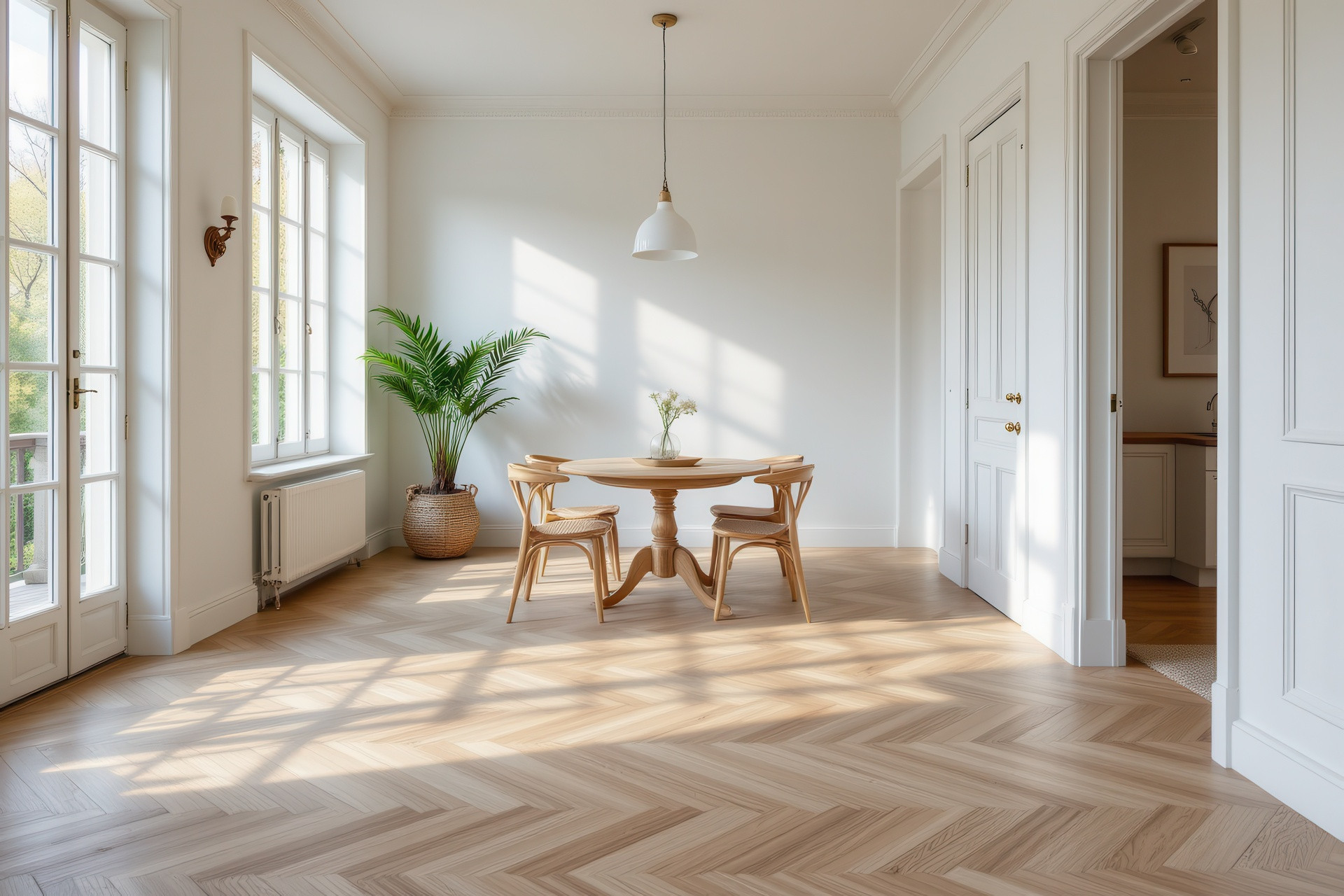
You walk into a home and something stops you. Before you even take in the furniture or the paint color, your eyes drop to the floor. There’s a pattern there, something structured and elegant, planks woven together in a V-shape that pulls the room into focus. That’s herringbone, and right now, homeowners across Covina, Glendora, and West Covina are asking for it by name.
It used to be the kind of detail you’d find in European manor houses or high-end new construction. Today, thanks to advances in laminate flooring, that same sophisticated look is accessible, durable, and genuinely practical for real California homes.
So What Exactly Is Herringbone?
Herringbone is a layout pattern, not a material. Instead of running planks parallel in long straight rows, each plank is cut at a 45-degree angle and laid in a staggered zigzag that forms a repeating V. The name comes from the skeleton of a herring fish, which the pattern resembles closely. It’s been used in architecture and textiles for centuries, and the reason it keeps coming back is simple: it’s visually dynamic without being busy.
When applied to laminate, the result is a floor that has the character of hardwood or stone, the geometric boldness of tile work, and the practicality of a material that handles foot traffic, the occasional spill, and Southern California daily life without complaint.
Why Entryways Are the Perfect Stage for This Pattern
Think about what your entryway does. It’s the first thing guests see, it takes the brunt of daily comings and goings, and it sets the entire tone for the rest of your home. For most Covina homeowners, that’s a lot of pressure to put on a small strip of flooring.
Herringbone laminate delivers on every front. The angled pattern creates a natural visual boundary that defines the entry space, even in open floor plans where there are no walls to separate it. The zigzag draws the eye inward, making even a narrow entry feel wider and more intentional. And because laminate is scratch-resistant and easy to clean, you’re not sacrificing durability for style.
The Dining Room Connection
The dining room is the other space where herringbone laminate truly earns its place. Dining rooms are rooms of ceremony, even when it’s just a Tuesday night dinner. They host gatherings, holiday meals, and the kind of conversations you remember. The floor underneath all of that should feel like it belongs.
Herringbone adds formality without stiffness. A warm oak-toned herringbone under a round dining table creates a sense of center and structure. A cooler, gray-washed pattern under a modern farm table feels curated and current. Either way, the pattern does something a simple straight-lay floor cannot: it makes the room feel designed.
The Laminate Advantage: Beauty Without the Upkeep
Authentic herringbone hardwood is stunning, but it comes with real demands. It requires careful humidity monitoring, refinishing over the years, and a willingness to be gentle with it. For households in Covina and La Verne with kids, pets, or just a busy lifestyle, that trade-off doesn’t always make sense.
Laminate herringbone gives you the look with significantly less maintenance. Modern laminate products replicate wood grain with impressive realism, and the wear layer on quality planks handles scratching and fading well. When the time comes to replace it, laminate installation is also faster and less disruptive than hardwood, which matters when you’re working around family schedules.
Choosing the Right Tone for Your Home
Not all herringbone laminate is the same, and the tone you choose will shape the entire feel of the space.
Warm tones (honey oak, amber, chestnut) read as inviting and traditional. They work beautifully in homes with warmer paint palettes and wood cabinetry, and they feel especially at home in dining rooms meant for lingering.
Cool and neutral tones (gray, whitewashed, ash) lean contemporary. They pair well with white walls, matte black fixtures, and the kind of clean, unfussy interiors that are popular throughout the San Gabriel Valley right now.
Dark tones (walnut, espresso, smoked wood) are dramatic and bold. They make a strong statement in an entryway and create contrast that highlights furniture and art.
A Word on Scale: Plank Width Matters
One detail that often gets overlooked is plank width. Narrow planks in a herringbone pattern create a more intricate, busy texture that feels vintage and artisan. Wider planks produce a more modern, open look with fewer seams and a cleaner visual rhythm. For a dining room, wider planks tend to feel grounded and generous. For a smaller entryway, narrower planks amplify the pattern’s complexity and add visual texture to a tight space.
Does the Rest of the House Need to Match?
This is the question almost every homeowner asks. The answer is: not exactly, but it should relate. Herringbone in an entryway or dining room reads as an intentional design choice, an accent that frames those specific spaces. The rest of your home can have the same laminate in a standard straight-lay pattern, which creates continuity without repetition. The herringbone becomes the feature; the rest of the floor is the backdrop.
If you’re considering carrying the herringbone through multiple rooms, it works, but the effect becomes maximalist quickly. For most Covina homes, keeping it to one or two rooms lets the pattern stay special.
See the Pattern That’s Changing Covina Homes
At Nemeth Family Interiors, we’ve been helping homeowners across Covina, Glendora, and West Covina find flooring they love since 1975. If herringbone laminate has caught your eye, we’d love to help you explore your options and find the perfect tone and style for your space. Stop by our showroom or schedule a free in-home estimate and we’ll bring the samples straight to you.