
How to Match Existing Hardwood Floors Without Replacing Everything
Hardwood floors carry stories. Years of daily life, shifting sunlight, and seasonal changes slowly shape their tone and character. So when an addition, renovation, or repair calls for new boards, replacing everything is rarely the first choice. Matching existing hardwood without starting over is absolutely possible — it simply requires careful planning, product knowledge, and precise installation.
Where the real challenge begins
At first glance, matching hardwood may seem as simple as identifying the species and purchasing more of the same product. In reality, several factors influence how a floor looks today compared to when it was first installed. Age, exposure to light, finish sheen, plank width, and even milling styles all affect the final appearance.
A successful match depends on understanding these details before new boards are introduced into the space.
Start with species and grain pattern
The foundation of any good match begins with identifying the wood species. Red oak, white oak, maple, hickory, and other hardwoods each have distinct grain characteristics and natural color variation. Even within the same species, grain patterns can range from straight and subtle to bold and dramatic.
Bringing a small sample or clear photos into a flooring company showroom makes the identification process easier. Experienced flooring experts can often narrow down the species by examining grain movement, color depth, and board structure.
Plank width and thickness matter more than expected
Older homes frequently feature narrower planks — sometimes 2¼ inches wide — while many modern installations lean toward wider boards. If new planks are noticeably wider or thinner, the difference becomes immediately visible, even if the color is close.
Matching plank width preserves visual continuity. Thickness is equally important when tying into adjacent rooms. If the existing floor is ¾-inch solid hardwood, new boards must align correctly to avoid uneven transitions between spaces.
Color blending requires patience
Over time, hardwood naturally deepens or shifts in tone due to sunlight exposure. This is especially noticeable in oak flooring. What once looked light and uniform may now carry a warmer, richer hue.
Rather than expecting a perfect out-of-the-box match, many successful projects focus on selecting a complementary tone that blends gradually with the existing floor. Natural variation within hardwood actually helps disguise subtle differences between older and newer sections.
Finish sheen also plays a role. Matte, satin, and semi-gloss finishes reflect light differently. Even when the color is close, a mismatched sheen can make new boards stand out unnecessarily.
Weaving new boards into existing flooring
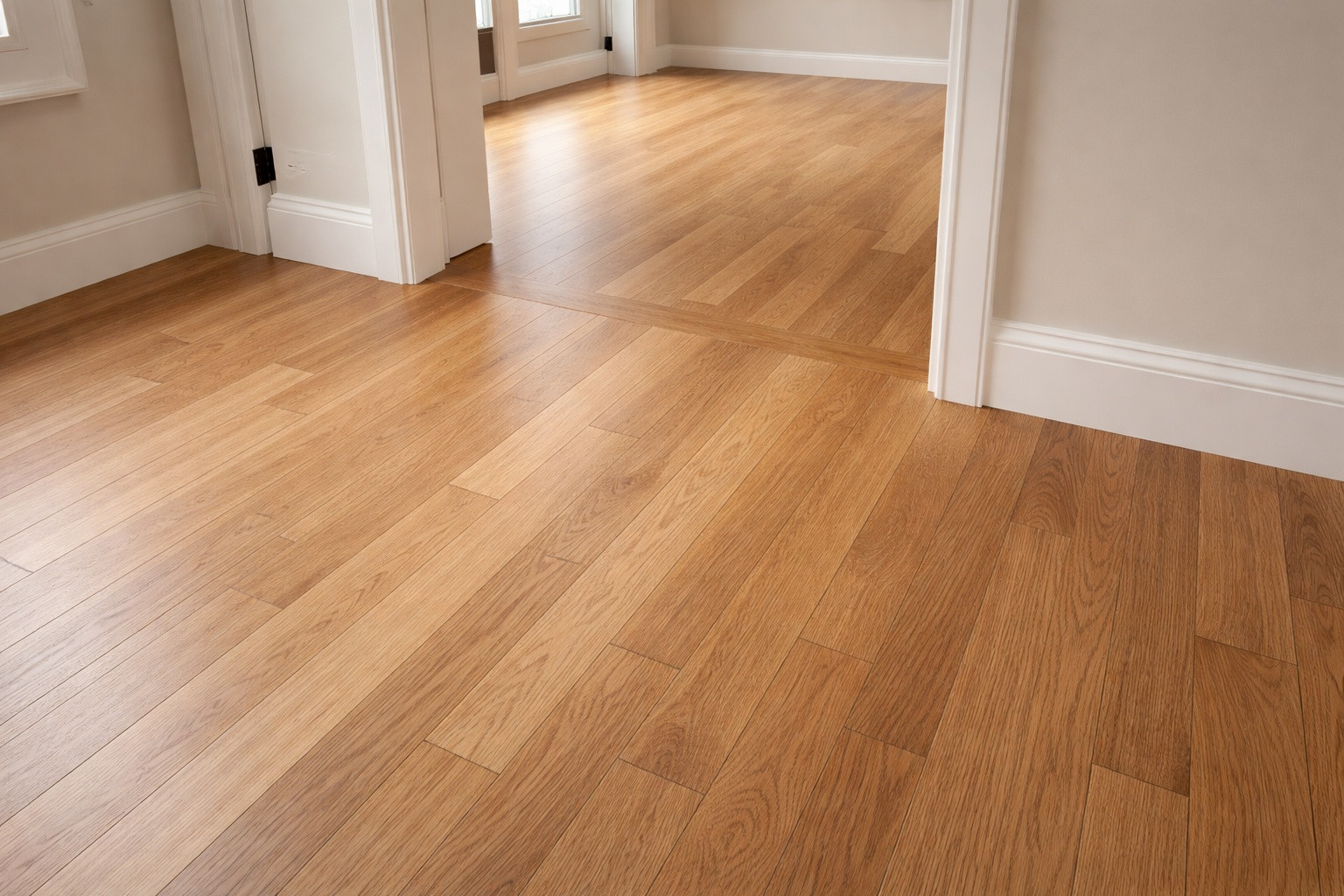
When extending hardwood into an adjoining room, creating a straight seam between old and new boards can make the addition obvious. A technique often used by professional installers involves carefully integrating new planks into the existing layout instead of ending at a single cut line.
This method allows boards to flow more naturally across the transition area, helping eliminate the visual break. Precision cutting and careful alignment are essential to achieve this seamless appearance.
When engineered hardwood becomes a practical option
In some cases, matching solid hardwood exactly can be challenging due to discontinued product lines or specific milling styles. Engineered hardwood may offer a suitable alternative, particularly in areas where added dimensional stability is beneficial.
High-quality engineered hardwood with a compatible veneer can visually align well with existing flooring when tone, plank size, and finish are thoughtfully selected. Access to multiple trusted brands expands the chances of finding a close match.
Designing intentional transitions when needed
If a flawless match is not realistic, design can help bridge the gap. A subtle transition detail — such as a feature strip or threshold accent — can make the change feel purposeful rather than accidental.
This approach works especially well between rooms where natural breaks already occur, such as doorways or hallways.
Precision installation makes the difference
Matching hardwood is equal parts product selection and craftsmanship. Small inconsistencies in board dimensions, alignment, or spacing become noticeable once installed across a large area.
A careful evaluation of the existing floor, moisture conditions, and structural layout ensures that new boards integrate properly. Professional installation helps maintain consistent spacing, secure fastening, and a smooth transition between sections.
Blending instead of replacing
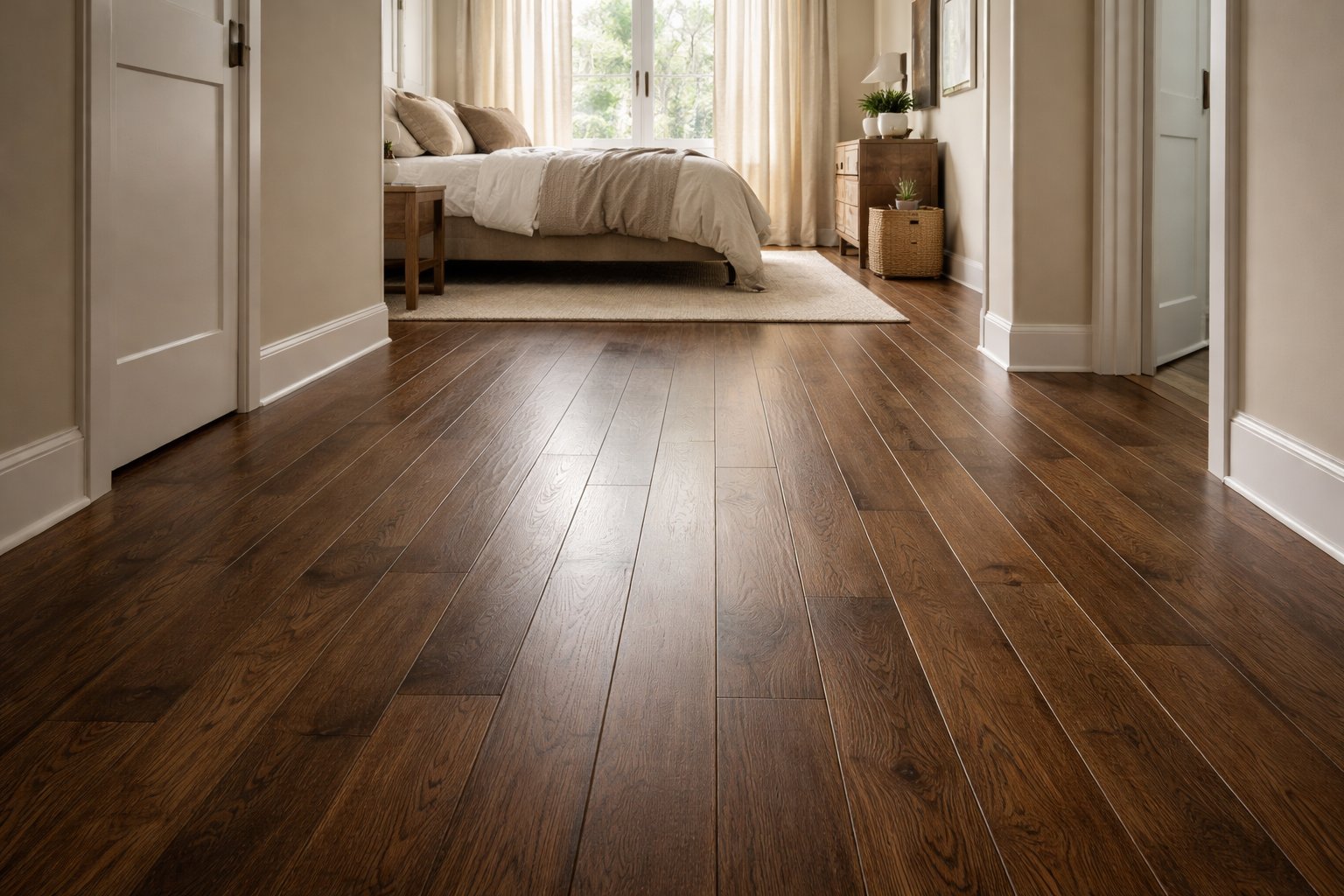
One of the greatest advantages of hardwood flooring is its longevity. Expanding or repairing a section does not mean the entire floor must be removed. With thoughtful planning, compatible materials, and expert installation, new hardwood can blend naturally into the character of the existing space.
Extending hardwood while preserving what is already in place keeps the home cohesive and avoids unnecessary disruption.