
How to Choose Between Laminate and Luxury Vinyl When Both Look Like Real Wood
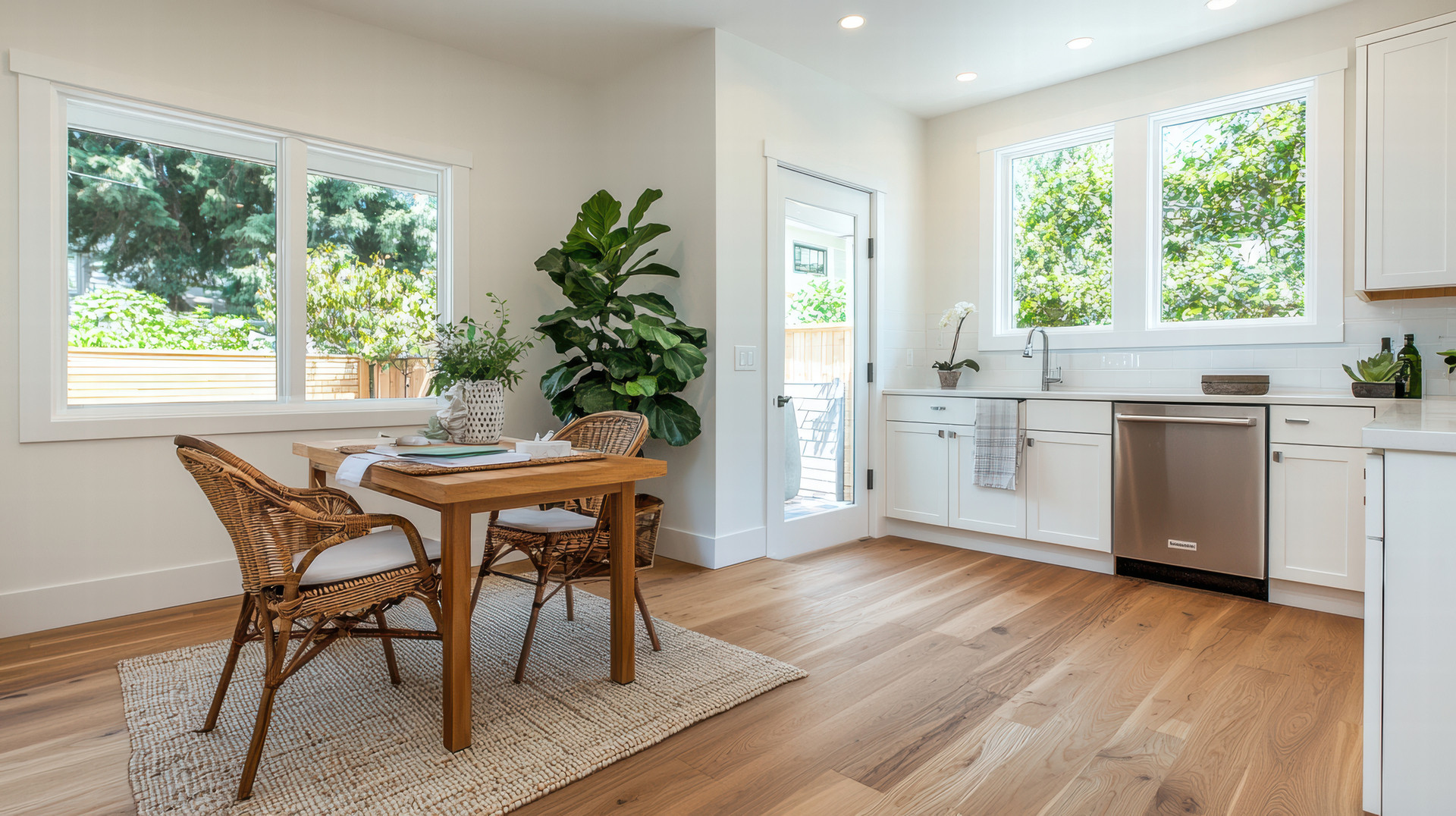
You’re standing in the flooring aisle, or maybe scrolling through options online, and you keep landing on the same problem. Two products. Both look like real wood. Both come in the same warm oak tones, the same gray washes, the same wide-plank formats. The labels say different things — one says laminate, one says luxury vinyl — but the photos look nearly identical.
This is one of the most common conversations we have with homeowners in Covina and across the San Gabriel Valley. And the honest answer is that both are genuinely good floors. The right one just depends on your home, your lifestyle, and where you’re putting it. Here’s how to think through the decision.
They Look the Same. They Are Not the Same.
It helps to start with what’s actually inside each product, because despite looking similar on the surface, laminate and luxury vinyl have very different cores.
Laminate is built around a high-density fiberboard core, essentially compressed wood fibers. On top of that sits a photographic layer printed to mimic wood grain, protected by a clear wear layer. It’s a wood-based product at its heart, which means it responds to moisture the way wood does. Not well.
Luxury vinyl, on the other hand, is built from synthetic materials all the way through. Its core is plastic-based, rigid or semi-rigid depending on the product, and the entire plank is waterproof from top to bottom. The wood look comes from the same kind of photographic printing process, but the material underneath has no wood content at all.
That one structural difference is where most of the real-world decision-making happens.
The Water Question Changes Everything
If there’s any chance of moisture in the room, luxury vinyl wins that argument clearly. Bathrooms, laundry rooms, kitchens, and mudrooms are all spaces where laminate will eventually struggle. Spills that sit for too long, humidity from cooking, steam from showers — over time, the fiberboard core can swell, warp, or cause the joints to separate.
Luxury vinyl handles all of that without flinching. It can even be installed in below-grade spaces like basements, where laminate typically can’t. For Covina homeowners renovating a kitchen or adding a bathroom, this is often the factor that ends the debate.
Where Laminate Holds Its Ground
That said, laminate isn’t playing second fiddle across the board. In dry living areas, bedrooms, offices, and dining rooms, laminate can be the stronger choice for a few reasons.
First, the feel underfoot. Because laminate has a wood-fiber core, it tends to feel more solid and substantial when you walk on it. There’s a warmth and density to it that some homeowners find closer to the feel of real hardwood. Luxury vinyl, particularly thinner products, can feel slightly more hollow or springy.
Second, surface hardness. The wear layer on quality laminate is exceptionally scratch-resistant, which matters in homes with dogs or heavy furniture. It also holds up well to the kind of heavy foot traffic that happens in main living spaces.
Third, the visual depth. Because the texture on laminate is embossed into a harder surface, the grain detail can have a slightly more dimensional quality in certain products. Side by side with luxury vinyl, the difference is subtle, but some homeowners notice it.
Comfort and Temperature in a Southern California Home
Here’s a consideration that’s easy to overlook. In a place like Covina, where interiors can heat up during summer months, flooring temperature underfoot becomes noticeable. Luxury vinyl can feel cooler underfoot than laminate, which some people love and others find less comfortable year-round.
Laminate, with its wood-based core, tends to moderate temperature a little more naturally. Neither product is warm like carpet, but if you’re walking barefoot through the house in July, you’ll notice the difference.
The Thickness Conversation
Both products come in a range of thicknesses, and this matters for installation. If you’re replacing old flooring and the new floor needs to match the height of adjacent rooms or existing transitions, the thickness of your plank will determine how that works. Thicker products also add more cushion and sound absorption, which is particularly noticeable in upstairs rooms.
When it comes to laminate installation, thicker planks with attached underlayment also perform better on subfloors that aren’t perfectly level, since there’s more flexibility in the product to compensate. Luxury vinyl with a rigid core is similarly forgiving, but the two materials behave differently during installation, so it’s worth discussing your specific subfloor conditions with a flooring expert before committing.
The Side-by-Side Summary
If you’re in a moisture-prone area of the home, go luxury vinyl. If you want the most realistic underfoot feel and you’re working in a dry space, laminate is worth serious consideration. If you have pets and want scratch resistance, both hold up well, but check the wear layer thickness on whichever product you choose. If you’re working with a tight budget, laminate often offers more visual variety at the same price point. If you need something installed over radiant heat, luxury vinyl generally performs better with temperature fluctuations beneath the floor.
Neither product is universally better. They just answer different questions.
We’re Here to Help You Make the Call
At Nemeth Family Interiors, our flooring experts are happy to walk you through both options in person, help you compare samples side by side, and talk through the specifics of your rooms and lifestyle. Visit our showroom in Covina or schedule your free in-home estimate so we can take a look at your space and help you make a confident decision.